 SUWANOSEJIMA
🇯🇵 Int'l Island Manga Artist, Ira
🇸🇬 Singapore PR
🌏 ADHD + ASD | IQ 115 | BMI 17.7
⛴️ Fastest to 500 islands in 3 years (World Record)
🙇 Japanese-to-English Google Translation. Apologies for any errors.
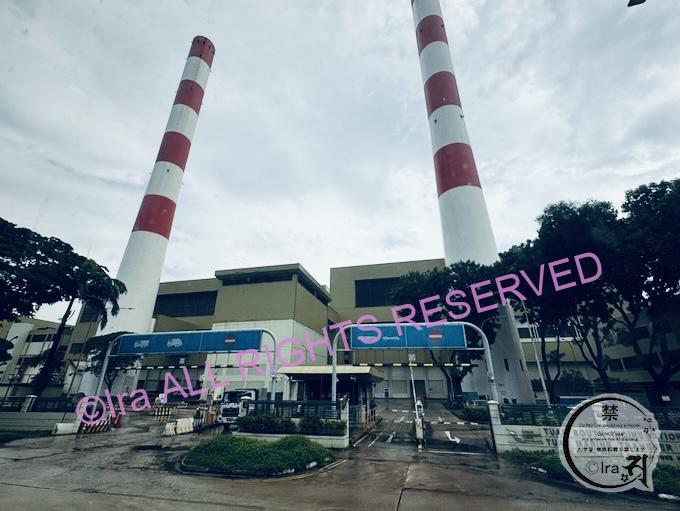
Tuas South Incineration Plant Popularity / Hidden Spot Rating: 2 Stars
★★☆☆☆: 2 Stars -> [Off the beaten path]
Ira’s Comments:
① A holy grail for factory enthusiasts. A rare-value tour since it is mostly restricted access.
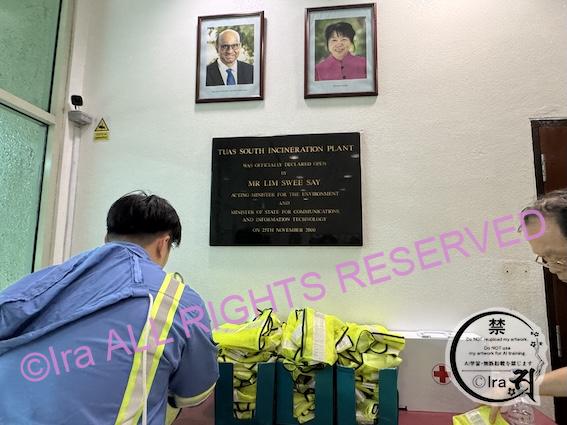
② A key infrastructure facility with a “relaxed/casual vibe” where food flyers, shift schedules, and routine check logs were openly displayed in the restricted monitoring room.
③ No souvenirs.
④ Short-term visitors can also participate.
People cultivating Kiasu—that’s living in Singapore.
 花<br>HANA
[Ira’s Evaluation Criteria] International Recognition + Landmark★★★★★: 5 Stars -> [Super Classic] Government PR for overseas / Landmark
★★★★☆: 4 Stars -> [Classic] Landmark
★★★☆☆: 3 Stars -> [Semi-Classic] High recognition locally
★★☆☆☆: 2 Stars -> [Hidden Gem] Local area. Not a general tourist spot
★☆☆☆☆: 1 Star -> [Super Hidden Gem] Low recognition even among citizens
The general admission fee is 525 SGD (Max 35 people per group). However, it is free if conditions are met.
花<br>HANAThis is one of the major infrastructure facilities under the jurisdiction of the Singapore government.
Most areas are strictly no-photography.
I got the impression that if you don’t join a high-priced tour, “there might be a risk of being lumped into those illegal Chinese-affiliated tours that have become a problem in recent years.
It was a fully booked 2-hour tour. Guides spoke English and Chinese (Hokkien).
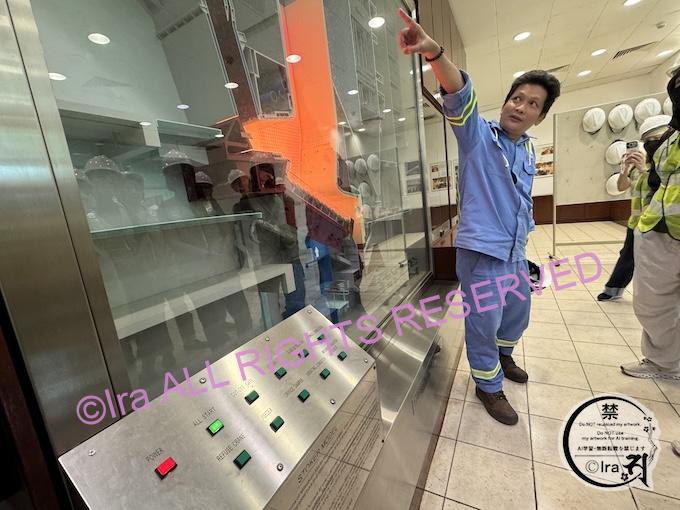
According to the guides, all participants in this tour except Ira were Singapore citizens.
“Are you a Japanese international student at a university in Singapore?”
Ira was asked.
Other participants seemed to be retirees or stay-at-home mothers whose children were at school.
Both participants and guides were polite and friendly. At the end, they shook hands with each person individually. With this kind of tour content, the public decorum might be higher than usual.
They seemed like an educated group with a strong awareness of social issues. Especially the guides.
① “A Japanese person is participating! Extremely rare (and attending solo)”
② “Coming all the way to western Singapore must be far from your home. Did you apply by mistake?”
They even made a pre-confirmation call at this level. How surprising.
Ira didn’t make a mistake on the application. Ira is an island manga artist.
This is research on Singapore Island.
Field trips are basically all for that.
⚠️Dress Code Regulations
① Slip-ons, sandals, and high heels are prohibited. All participants wore sneakers.
② Skirts and long skirts are also prohibited. Must wear pants covering all skin on legs, as it is a factory.
③ Free rental of helmets, vests, and English audio guide earphones available.
Field Trip / Educational Tour Information
| Category | Details | Source / URL |
| Application & Booking | Pre-booking required via the official booking platform (Ludus Lab / Clean & Green Singapore portal). | Ludus Lab – Tuas South Incineration Plant Tour |
| Pricing / Tour Fee | Schools & Community Groups: 100% subsidized (Free) by the National Environment Agency (NEA) upon approval. Standard Group Fee: S$525 nett per session (equivalent to S$15/participant based on a group of 35). | Ludus Lab – Tuas South Incineration Plant Tour |
| Target Audience & Requirements | Eligible Participants: Open to Singapore residents (including work permit holders) and school/community groups. Age Limit: Minimum age of 12 years (minors under 18 require adult supervision). Attire Requirement: Covered shoes and long pants required (no high heels/sandals due to industrial safety regulations). | Ludus Lab – Tuas South Incineration Plant Tour |
| Schedule / Days | Day & Time: 1st Tuesday of each month, 2:30 PM – 4:30 PM (Duration: 2 hours). | Ludus Lab – Tuas South Incineration Plant Tour |
| Group Size (Min / Max) | Minimum / Maximum Capacity: 25 to 35 participants per group slot. | Ludus Lab – Tuas South Incineration Plant Tour |
| Government & Program References | • Clean & Green Singapore Event Listing • National Environment Agency (NEA) Learning Journeys | • Clean & Green Singapore – Tour Listing • NEA Installation Visits Portal |
Plant Overview & Environmental Commitment
| Category | Details |
| Facility Name | Tuas South Incineration Plant |
| Operating Agency | National Environment Agency (NEA) |
| Construction Cost & Completion | Cost: S$890 million / Completion: June 2000 |
| Site Area & Scale | 10.5 ha of reclaimed land / 4th and one of the largest waste-to-energy plants in Singapore |
| Incineration Capacity | 3,000 tonnes daily |
| Features & Technology | Built with state-of-the-art technology, highly automated via Distributed Control System (DCS), delivering high efficiency and reliability |
| Waste & Environmental Impact | Achieves ~90% reduction in waste volume. Incinerable waste is processed at WTE plants; non-incinerable waste and ash are disposed of at Semakau Landfill |
| Certifications | ISO 14001, ISO 50001, Bureau Veritas, SAC, etc. |
Plant Design Data, Main Equipment & Environmental Policy
| Category | Details |
| Plant Design Data | ・Incineration Capacity: 3,000 tonnes per day ・Steam Generation per Boiler: 105 tonnes per hour, 35 barG at 370 °C ・Condensing Pressure: 0.17 barA ・Power Generation Capacity: 80 MW, 10.5 kV generator voltage |
| Main Equipment: Waste Handling | 8 weighbridges (50t capacity each), 24 waste discharge bays, 2 waste screening bays, 4 bulky waste rotary shears (25t/h capacity), 2 bulky waste cranes & 4 waste cranes (10m³ each), 2 separate waste storage bunkers & 1 bulky waste storage pit |
| Main Equipment: Incineration & Steam | 6 stoker / furnace units with integral boilers |
| Main Equipment: Flue Gas Handling | 6 two-zone electrostatic precipitators, 6 ten-compartment catalytic bag filters (2,240 fabric bags each), 2 concrete chimneys (150m height), 2 lime silos & 2 reaction product silos |
| Main Equipment: Ash & Scrap Recovery | 2 pusher-type hydraulic slag extractors and vibrating conveyors, 2 magnetic separators to each incinerator unit, 3 overhead wire rope operated cranes (3.5m³ each) |
| Main Equipment: Power & Water | 2 condensing steam turbines coupled to generators (max rating 66.3MW each), 2 air-cooled condenser systems (12 fans each), 3 rain water buffer basins (7,000m³ capacity), NEWater feedwater treatment system |
| TSIP Environmental Policy | 1. Establish and implement effective environmental management systems and comply with regulations. 2. Minimize pollution through adoption of new technology for flue gas, waste, and wastewater management. 3. Continually improve environmental performance and operating conditions. 4. Train, educate, and encourage employees, contractors, and customers. 5. Seek to communicate environmental policy to all stakeholders. |
The Incineration Process (8 Steps)
| Step | Process Description |
| 1. Waste Intake | Waste collection vehicles are weighed on weighbridges, drive into the reception hall to unload waste into bunkers, and are weighed again empty to calculate waste weight. |
| 2. Storage & Feed | Waste bunkers are kept under negative atmospheric pressure to prevent odor escape. Waste is fed into the six incinerators via waste cranes. |
| 3. Bulky Waste Crushing | Four high-capacity rotary bulky waste crushers integrated into the reception hall enable direct crushing and storage during off-peak hours. |
| 4. Combustion Control | Advanced combustion control systems regulate waste feeding and combustion rate to achieve complete burnout of the waste. |
| 5. Flue Gas Cleaning | Catalytic fabric filter system installed after a 2-zone electrostatic precipitator cleans the flue gas, which is discharged via two 150m tall chimneys. |
| 6. Ash & Scrap Handling | Ash and slag are transported via vibrating conveyors. Ferrous scrap metal is recovered by electro-magnetic separators for recycling, while ash/slag is shipped to Semakau Landfill. |
| 7. Power & Water Recovery | Heat generates steam driving two turbines to generate electricity (approx. 20% self-consumed, 80% sold). Exhaust steam is condensed in air-cooled condensers for reuse. |
| 8. Central Control (DCS) | Central Control Room utilizes a Distributed Control System (DCS) manned 24/7 by operators on rotating shifts to monitor and operate plant processes. |
Tuas South Incineration Plant
花<br>HANA98 Tuas South Ave 3, Singapore 637821